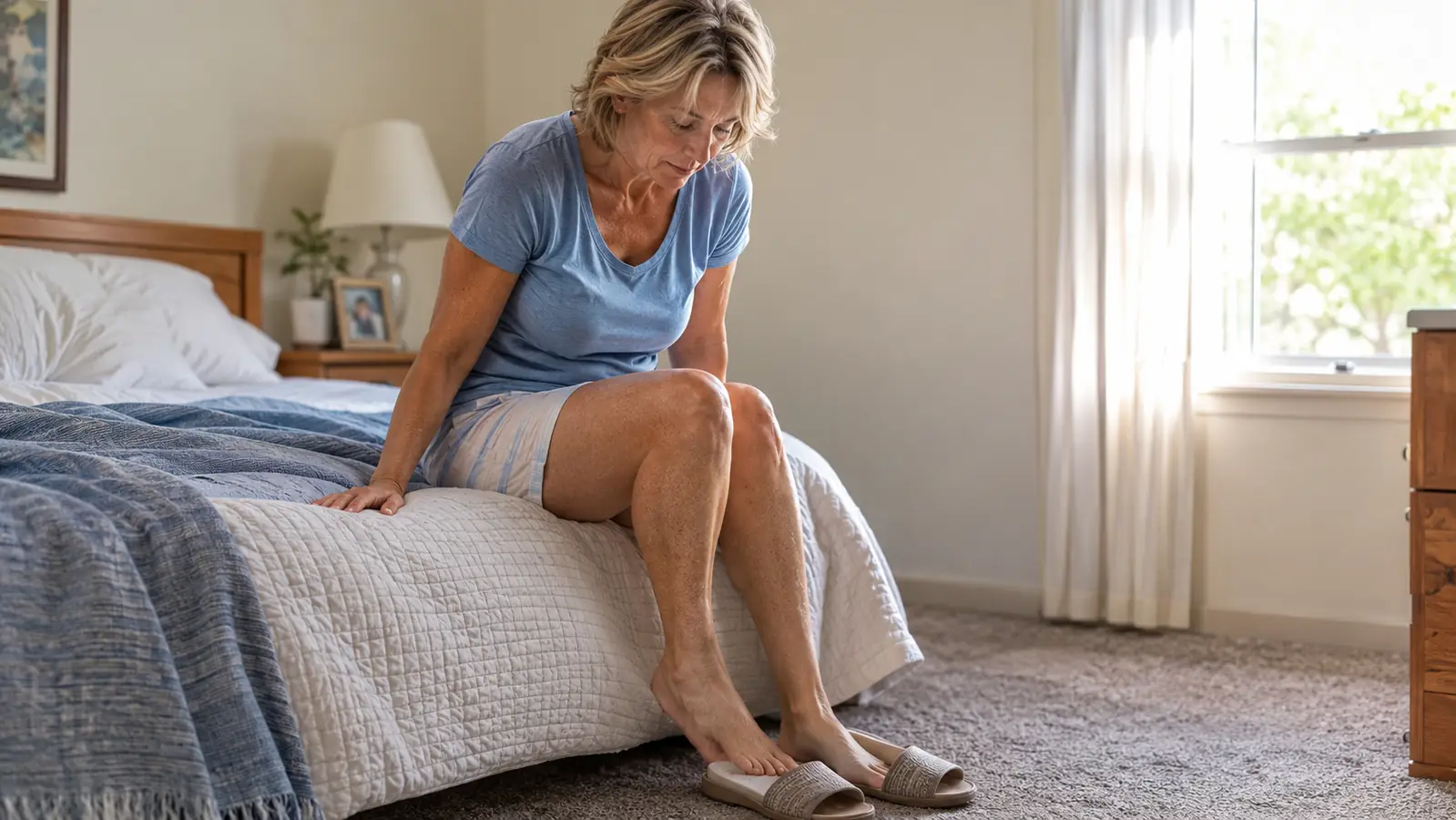
The alarm goes off at 5:40 and before my feet touch the floor I already know how the morning will go. For a year now the left heel has been the first thing I think about. Four steps from the bed to the bathroom tile are the ones that tell me the truth, and for most of this year they told me it was going to be a slow start. In May I bought a pair of KuaiLu recovery sandals and left them on the floor beside the bed. Six months later they are still there, still the first thing my feet go into, and those four steps are softer than they were. That is the whole claim. I am not going to make it bigger than it is.
I am 59, I manage the office and the floor at a family hardware store in Medford, Oregon, and I have been on my feet on concrete for fourteen years. My family doctor, Dr. Okafor, named plantar fasciitis in December 2025, told me to stretch my calves and to get better support under my feet, and that was the plan. No podiatrist, no injections, no boot, no night splint. What follows is what I noticed in my own feet wearing one pair of slides around one single-story house. Feet differ, and mine are not yours. If yours are numb, swollen, or hurting in a way that will not settle, that is a doctor question, not a sandal question.
The Quick Verdict
Soft under the heel from the first morning and still holding their shape after six months of daily at-home wear. One star off for a single strap that cannot be adjusted and a sole that is not enough shoe for a long walk or a shift on concrete.
Amazon Check Today's Price →The pair beside my bed that made the first four steps easier
One pair of KuaiLu slides, worn at home only, six months in and still going. If your heel complains at 5:40 in the morning, this is the smallest change I made all year.
Amazon Check Today's Price on Amazon →How I've Used It
I bought one pair in May 2026, six months before I wrote this. Women's slides, one strap across the top, open toe, slip on. They have not left the property except to go down the driveway to the mailbox. That is the honest scope of this: one house with tile in the kitchen and the bathroom, hardwood in the hall and carpet in the bedroom, one pair of feet, and no stairs anywhere in the building.
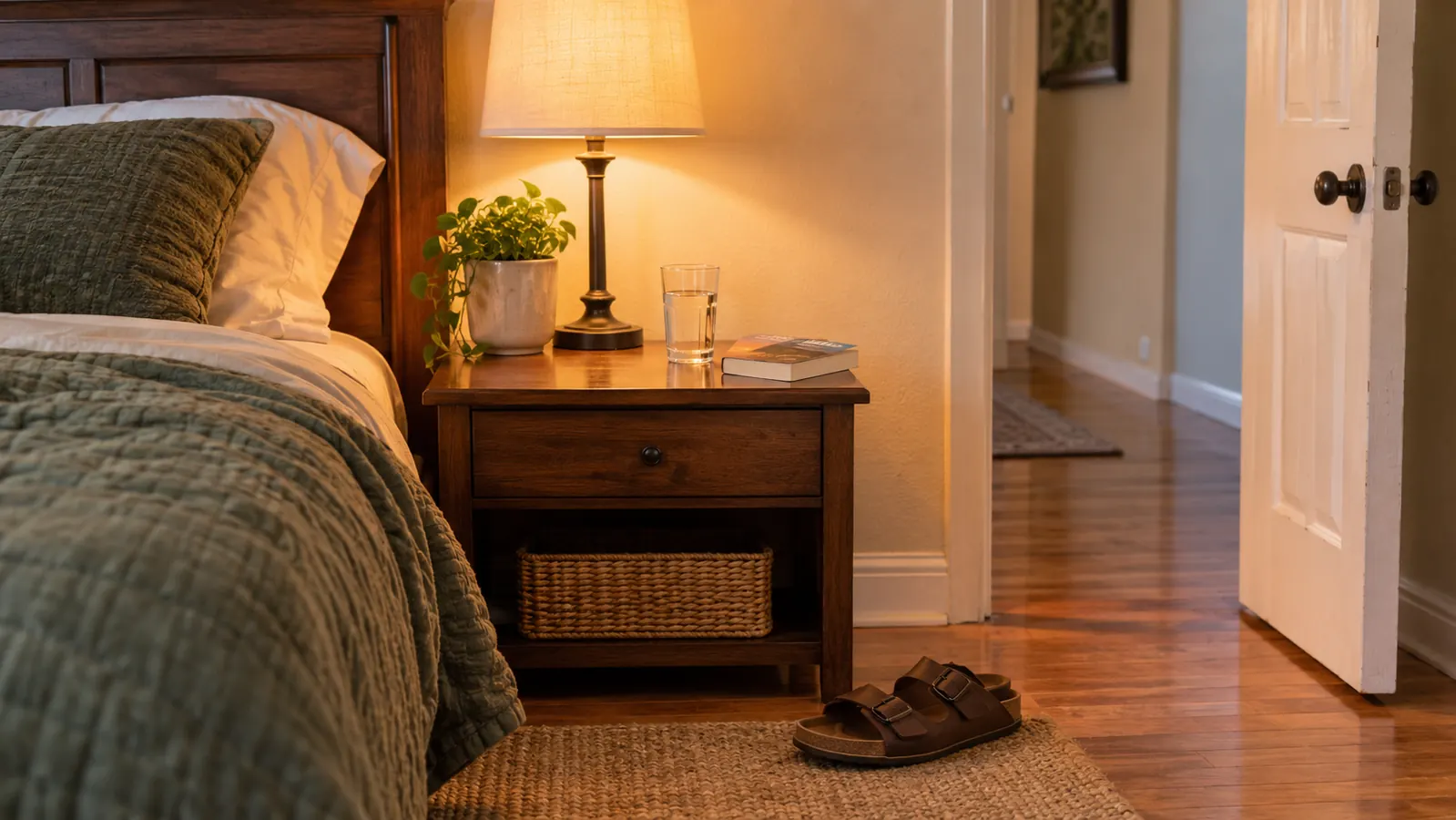
The routine is small and it has not changed since the first week. They sit on the floor next to the bed with the left sandal forward, because the left heel is the one that complains. I put them on before I stand up, not after. Four steps to the bathroom tile, then the hall, then the carpet while I get dressed. In the evening I put them back on after my shower and wear them until I go to bed. Kitchen, laundry, the porch, the mailbox. On a night I cook something that takes a while, that is maybe forty minutes standing at the counter.
What I do not do in them matters as much as what I do. I do not wear them to work. The work sneakers with the PCSsole insoles are for the store, Tuesday through Friday, and I would not put a slide on a concrete floor for eight hours. I do not wear them on the Sunday loop either. That is a mile and a half of pavement with my husband Don and it wants something with a back on it. The KuaiLu pair is a house shoe, and treating it like anything else is where people end up disappointed.
What the Arch Support Actually Feels Like
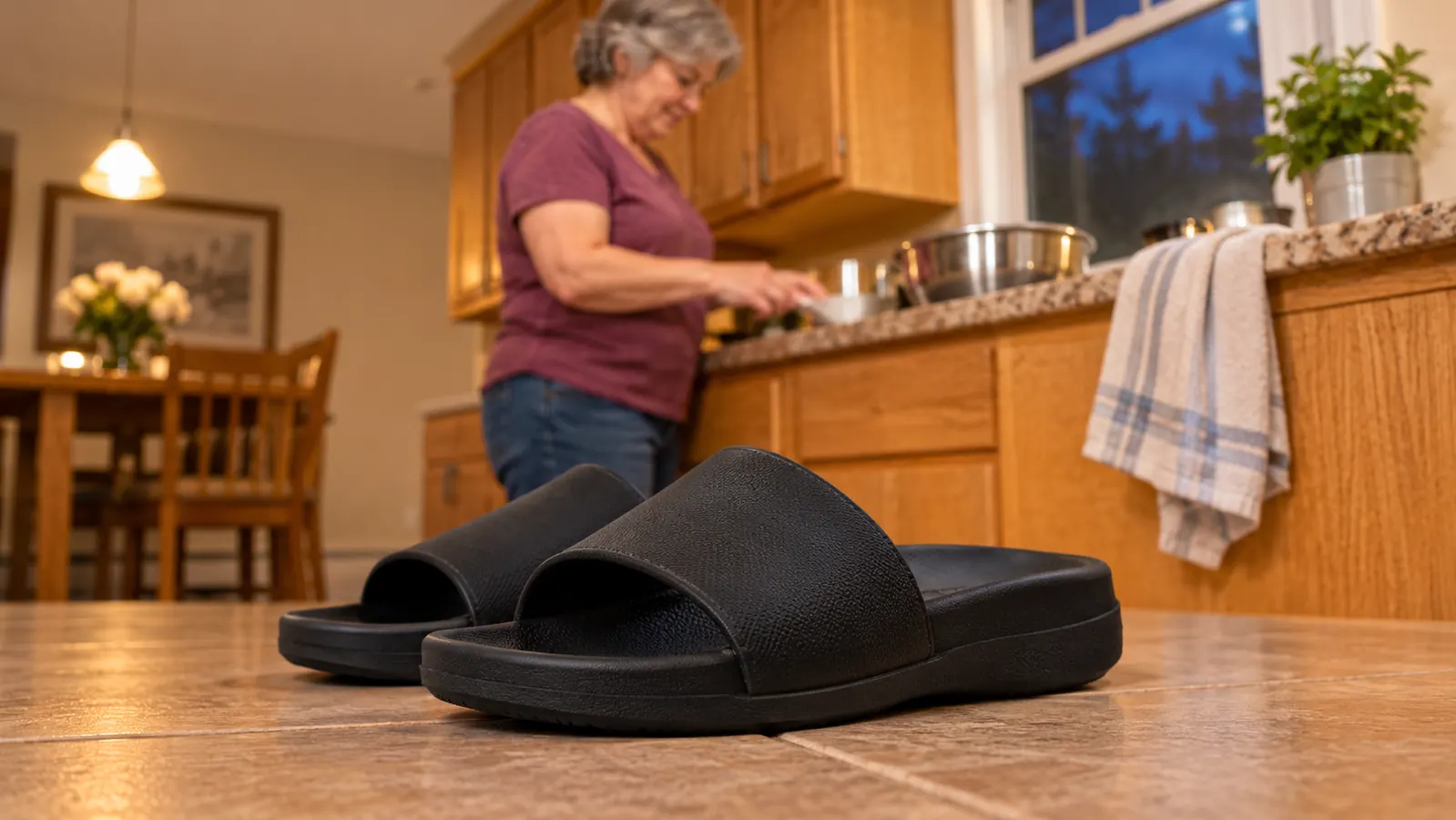
The listing says arch support and orthotic technology, and those are words that get used loosely, so let me tell you what my foot actually does when I step in. There is a raised shape under the middle of the foot that presses up. On the first morning it felt like standing on a rolled up sock. Not painful, just present, the way a new insole feels before your foot decides whether it is going to agree with it.
By the end of the first week I had stopped noticing it. That is the whole report on the arch, really. It holds the middle of my foot up instead of letting it flatten out into the sole, and after seven days my foot had made its peace with the shape. The heel is where I noticed something. The sole under the heel has some give. The listing calls that shock absorbing. I call it softer than tile, which is the only comparison that matters to me at 5:40 in the morning.
The bottom of the sandal is textured and the listing says slip resistant. My bathroom floor is tile and my kitchen floor is tile and I have not gone down in six months. I am not going to promise you anything about a wet pool deck. I can tell you that a woman of 59 walking into a dark bathroom at dawn has not slipped yet, and that is the whole of my evidence.
Six Months In: What Held Up and What Didn't
Six months of morning wear and evening wear inside one house. The sole has not flattened out. It has compressed slightly where the ball of my foot sits, the way foam does, but the shape under the arch is still there and the back of the sandal still cups my heel instead of letting it slide off the edge. The strap has held. There is no split where the strap meets the sole, which is where every cheap pair of slides I have owned has eventually failed.
The finish on the footbed has faded where my toes sit. That is cosmetic and I do not care about it. The listing says waterproof, so I have worn them out to the mailbox in the rain twice. They came back fine. Two trips is not a test of anything, so take that for what it is worth.
What did not hold up perfectly was the strap. In May it felt loose enough that I noticed it, and a slide with a loose single strap makes you curl your toes to keep it on, which is a bad habit for a foot with a sore heel. It took about a week for the strap to settle and for me to stop gripping with my toes. If your foot is narrow, that week may run longer for you, and there is nothing on the sandal to tighten.
Where They Fit in the Rest of My Routine
I did not replace anything with these. Everything I bought over the past year still does its own job and none of them overlap.
The PCSsole insoles live inside the work sneakers and go nowhere else. The calf stretcher sits on the bathroom floor and I use it every morning before shoes, three holds of 30 seconds per leg. The TheraFlow roller is under my desk in the back office at work and I use it at lunch with my shoes off. The SB SOX compression socks go under the sneakers every shift. The KuaiLu slides are the at-home pair, the ones for the first steps and the last hour of the day. Not one of those is responsible for how my heel feels now, and I would not tell you otherwise.
Before May, that at-home slot was bare feet and a pair of flat rubber flip flops I kept by the porch door. The flip flops went out that month. Walking around a tile house in bare feet first thing in the morning is a specific kind of stubborn, and I had been doing it for months without needing to.
What Changed, and What I Don't Credit Them For
Here is the part I want to get right, because it would be easy to write a review that says a pair of sandals turned things around. It did not. My mornings now are a mild ache most days rather than the sharp stab they were a year ago. That is better, not gone. I still feel it when I get up out of a chair after sitting through a long phone call. I still feel it if I have been on the concrete floor longer than usual.
What I changed over eleven months was this: better support inside the work shoes, calf stretching every morning, a roller at lunch, compression socks under the sneakers, and no more bare feet on tile at home. Any honest person would tell you that a set of small changes made together is not something you can separate out afterward. I cannot tell you how much of the improvement belongs to the sandals. I can tell you that they are the change I noticed soonest, on the very first morning, and that they are the one I would replace tomorrow if they broke.
The one bad stretch was the store's annual inventory in late June, an eleven hour day on concrete. The heel flared for about three days afterward and then settled. Nothing about that was the sandals' fault, and nothing about it was helped by them either.
Fit and the Single Strap
These are slip on slides with one strap across the top of the foot and an open toe. There is no back, no buckle, no closure at all. You step in and go. That means the fit is decided entirely by how that strap sits across the widest part of your foot, and there is nothing to adjust if it does not suit you.
I have an average width foot and mine fit. If your foot is narrow, a single strap slide tends to feel like it is going to walk off without you and you will do the toe curl I mentioned earlier. If your foot is wide across the top, the strap will sit higher and the sandal may feel shorter than it is. The heel is a flat block base rather than a wedge, which keeps the back of the sandal from folding under you when you step down. That is what I noticed, anyway. Sandals are fit first and everything else second, and this one has a single point of contact and no adjustment at all.
What I Liked
- Softer under the heel than tile or hardwood from the first morning
- Raised arch shape that holds the middle of the foot up without feeling like a lump by week two
- Slip on with no buckle to fight at 5:40 in the morning
- Six months of daily wear and the sole has not flattened out
- Slip resistant on tile and on a painted porch, in my experience
Where It Falls Short
- Single strap with no adjustment, so a narrow foot may feel it wants to slide off
- Took about a week before the strap stopped feeling loose
- Not enough shoe for a long walk or a shift on concrete
- Footbed finish faded where the toes sit
- No back, so nothing to keep it on if you need to move quickly
I cannot tell you how much of the improvement belongs to the sandals. I can tell you they are the change I noticed soonest, on the very first morning.
Who This Is For
If your heel is at its worst on the first steps out of bed, or after you have been sitting for an hour, and you have been walking around your own house in bare feet or flat flip flops, this is the smallest change I made all year and the one I noticed soonest. It suits anyone who wants a house shoe with arch support that is not a slipper with a hard sole, or something to step into for the porch and the mailbox.
It also suits people who stand at a kitchen counter, work at a table in the back room, or want a pair parked by the bed for the middle of the night. The KuaiLu slides are waterproof, slip on, and light enough that I forget I have them on, which is more than I can say for the flip flops they replaced.
Who Should Skip It
Skip these if you want one pair of sandals to do everything. They are not a walking shoe. I would not wear them on the Sunday loop and I would not wear them for eight hours on concrete, and I did neither. If you need a back, a buckle, or something you can tighten, this is the wrong sandal.
Skip them if your foot is narrow enough that a single strap slides off, or if a loose strap makes you grip with your toes. Skip them if what is going on in your foot is numbness, swelling, a sudden change, or pain that has not settled with rest and better support. That is not a sandal question. That is a call to your doctor or a podiatrist. Mine went from a sharp stab most mornings to a mild ache, and I credit no single product for that, these included.
Six months in, the pair by the bed is still the pair by the bed
If the first four steps of your morning are the worst part of your day, start with the thing you put on before you stand up. One pair of KuaiLu slides, worn at home, replaced when they wear out.
Amazon Check Today's Price on Amazon →