
Short answer: they are not the same tool, and the difference is not a matter of taste. A drugstore gel insole is a soft pad you drop in and forget about until it goes flat. PCSsole insoles are a firm, moulded, full length pair with a high arch and a cup under the heel, built to live in one pair of shoes for months at a time. If comfort means soft under the heel for the length of a grocery run, the gel pad does that job and does it well. If comfort means the end of an eight hour shift on a concrete floor does not leave you shuffling to the car, that is a different job and it needs a different object.
I am 59. I run the office and the front floor at a family hardware store in Medford, Oregon, Tuesday through Friday, eight to five, mostly standing on concrete. My left heel started hurting in October 2025, worst on the first steps out of bed and again after I had been sitting for a while. I bought a pair of drugstore gel insoles in December 2025 and used them for three weeks. In the first week of January 2026 I bought the PCSsole pair, trimmed them along the cutting line to fit my work sneakers, and they have been in those same sneakers every shift since. That is ten months. It is the whole of what I know about either one, and it is what this comparison is built on.
| PCSsole Insoles | Drugstore gel insole | |
|---|---|---|
| Arch | A moulded high arch that stays up under weight | Flat gel with no arch structure at all |
| Heel | A cup and a slight lift that keep the heel seated | Flat across the back, nothing to sit into |
| Staying put | Grippy top and base, so it does not creep toward the toe | Slid forward by lunchtime and had to be dragged back |
| After three weeks | Still the same shape at month ten | Packed flat and slick, and I threw them out |
| First hour | A firm ridge under the arch that took about a week to stop noticing | Soft and familiar from the very first step |
| Shoe it fits | Full length, so it wants a shoe that gives up its own liner | Thin enough for a flat or a tight sneaker |
| What it takes to try | More than a drugstore pair, and it is meant to last | The cheapest thing on the shelf |
| Best for | Eight hour shifts standing on concrete | A short errand in a shoe with no room |
Where PCSsole Wins
The difference is structure, and structure is the whole argument. The PCSsole insole has a moulded arch that sits up under the middle of my foot and stays up when I put my weight on it. The gel pads had nothing under the arch at all. My foot flattened into them and they took the shape of whatever was pressing down, which meant that by mid morning they were a thin skin between my foot and the liner that came with the sneaker. There is also a cup at the heel with a slight lift, so the back of my foot sits down inside something instead of sliding around on top of it. That is the part I noticed first at work, standing at the counter with a line of people and no chance to sit down.
Take a Tuesday in late January. A truck came in at nine and I spent two hours on the concrete at the back of the aisle, crouching and standing, breaking down pallets of hinges and gate hardware and working the shelf labels. With the gel pads, that afternoon would have ended with me rolling my foot on the floor and glad of it. With the firm pair, I noticed my feet at about four o'clock, which is to say I noticed them the way you notice your hands. They were there and they were fine and I went back to counting stock. That is the sort of thing that decides whether an insole earns its place in a shoe or ends up in a drawer.
The second difference is time, and this is where the two stop being comparable at all. The gel pair went flat and slick in about three weeks. They stopped springing back, they started sliding toward the toe of the sneaker, and I was dragging them into place with a finger every few hours. I threw them out. The PCSsole pair is on month ten and the arch has not collapsed. The top surface still grips my sock and the base still grips the inside of the shoe, so it stays where I put it in January. Ten months of eight hour days on concrete is a hard test for anything you put in a shoe.
The pair weighs about 200 grams, which is not a number you feel once it is under a sock. In the hand it is a solid object. In the shoe it stops being one. The listing describes it as thin, and under the toes it is, thin enough that my sneakers still closed over the top of my foot the way they had before. The substance of it sits under the arch and the heel, which is where my weight actually goes during a shift. That split is deliberate, I think, and it is the reason it does not feel like standing on a block of anything.
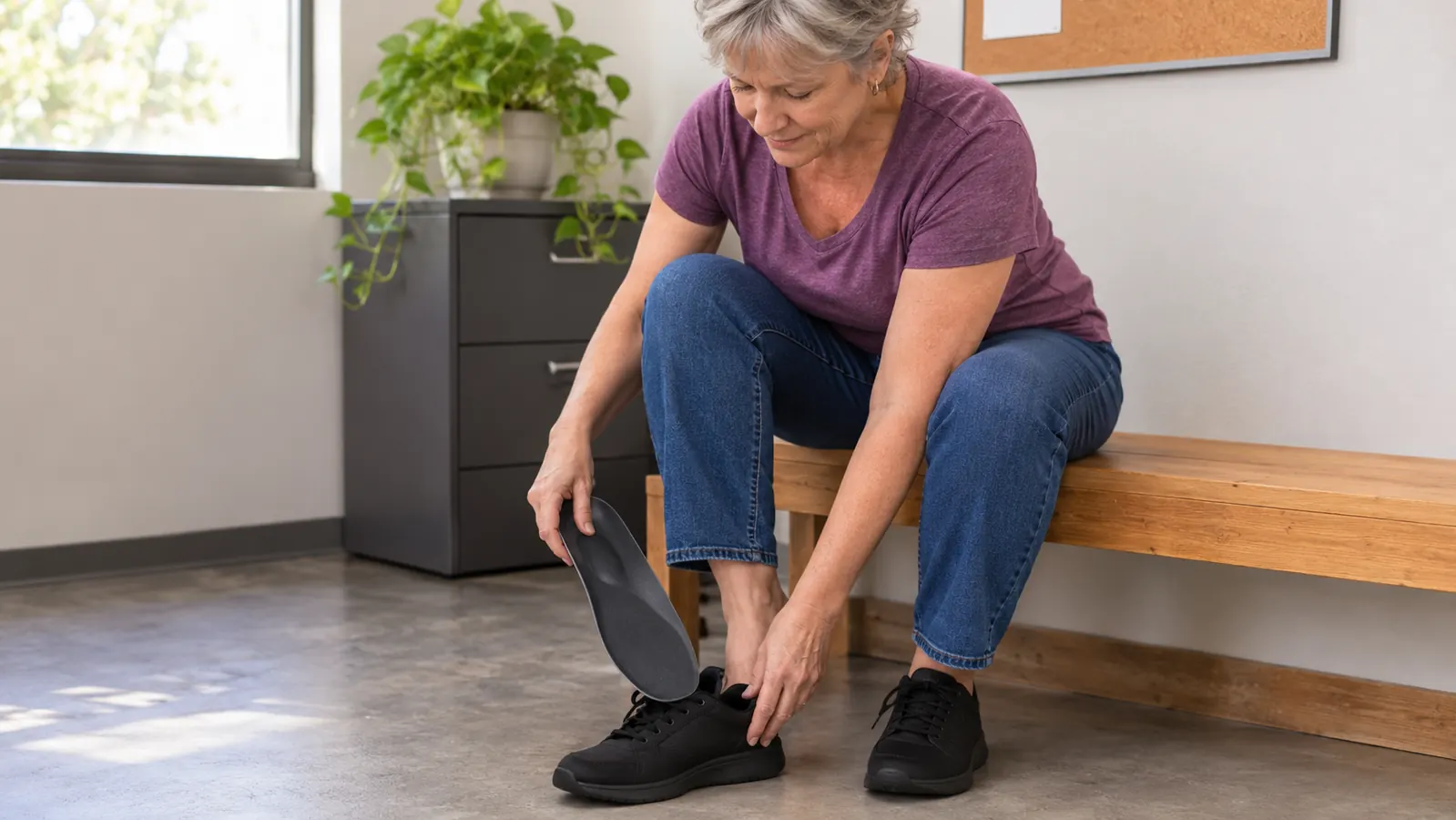
One practical note. They are full length, so they take the place of the liner that came in the sneaker. The original liner came out easily; it had never been glued down, it had just been sitting in there. I set the new one in, pressed my heel into the cup, and looked at where the toe end ran past the end of the shoe. Then I trimmed a few millimetres along the printed line, put it back, and checked again. It took three rounds before it sat with no wrinkle under the toes and no gap at the heel. Trim less than you think you need. You cannot put material back.
Where a Drugstore Insole Wins
I am not going to pretend the first week with the firm pair was pleasant. There is a ridge under the arch, and for about seven days I could feel it every time I stood up. Not pain exactly, just a constant notice me pressure that made me want to take my shoe off at lunch. It settled. The gel pad never did that. It felt like nothing from the first step, in the good sense of nothing. If what you want is to walk out of the store more comfortable than you walked in, a gel pad delivers that in ten seconds and a firm insole does not.
I bought the gel pair at the pharmacy on a Saturday in December 2025, off the rack by the register, and trimmed them at the kitchen table with the scissors from the drawer. The first morning on the bathroom tile they felt like a small kindness. Day two, same. Somewhere in the second week they started bunching under my toes inside the sneaker, and I would pull my shoe off at lunch to shake them back into place. By the third week they were flat and slick and I put them in the bin by the back door and did not think about them again until I sat down to write this.
They also fit where the other one will not. A flat gel pad is thin and trims to almost anything, including a dress shoe or a tight sneaker with no removable liner. A full length insole needs a shoe that will give up its own liner and still close over the top of your foot. And a drugstore pair is the cheaper thing to try, by a wide margin. If my only problem had been one long day at a wedding, I would have bought the gel pad again and thought it was fine. It was not a bad product. It was the wrong size of job for it.
Ten months in the same sneakers and the arch still has not flattened
Firm, full length, high arch, with a heel cup that keeps the heel seated instead of letting it wander. I trimmed mine along the printed cutting line and they have not moved since January.
Amazon Check Today's Price on Amazon →What the First Week Felt Like
The arch is the thing that makes people give up on a firm insole, and I understand why. It is high, it is not soft, and your foot is not used to being held up in the middle. My first reaction was that I had wasted my money. Day one, I wore them for two hours and then took them out and put the original liner back for the afternoon. Day two, I made it to lunch. Day three I got stubborn and left them in, and I was glad to get the sneakers off at five. Day four they went back in and stayed in. Somewhere around day six I stopped noticing the ridge. Not because it went away. Because my foot had stopped arguing with it.
By week three the end of a shift felt easier than it had in December, and that is the only claim I will make. It felt easier. I have no idea what was happening inside my foot and I am not going to pretend I do. My doctor told me in December 2025 to stretch my calves and get better support, and I did both, so I cannot separate one from the other and I would not try. Anyone who tells you they can tell which half did the work is guessing.
Comfort is a slippery word and it is doing a lot of quiet work in the question of which insole is better. There is comfort in the moment, which is the soft thing. And there is comfort at the end of the day, which is the boring thing where nothing in particular hurts and you are not planning your evening around the first chair you can sit in. The gel pad wins the first. The firm pair wins the second, for my foot, in a shoe I stand in for eight hours.
The gel pad wins the first ten seconds. The firm pair wins the eighth hour.

What Neither Insole Does
Neither one is a treatment and I want to be plain about that. An insole is a surface under your foot. It does not stretch a calf, it does not change how you walk, and it does not fix anything. I used a rubber calf stretcher every morning on the bathroom tile before my shoes went on, three holds of thirty seconds per leg, and I still do. The insole was one half of a routine, not the routine itself.
If your foot is numb, or swollen, or the pain arrived after a fall or a twist, or it has been getting worse rather than better for months, this is not a shopping decision. That is a call to a doctor or a podiatrist. Mine came on slowly in one heel and settled slowly, which is the only reason I was willing to spend ten months fiddling with insoles instead of doing something more sensible. Feet differ. Mine is one foot, on one woman, in one pair of sneakers, and what fit my foot may not suit yours.
Who Should Buy Which
Buy the PCSsole pair if you stand or walk for most of a shift, if your shoes are roomy enough to give up their own liner, and if you are willing to give a firm arch a full week before you decide anything. Buy the drugstore gel pad if you need something thin for a shoe that has no room, if you want to test whether a little padding changes anything before spending more, or if a raised arch is something you have already tried and disliked. Both of those are reasonable answers and neither of them makes you foolish.
And if neither sounds right, that is information too. What helped me most in the mornings was not an insole at all. It was the calf stretcher and the extra ten minutes before I put weight on the tile. The insole made the shift bearable. The stretching is what I would keep if I could only keep one thing, and that is what I would say to anyone who asked me across the counter. Nobody wants to hear it. I did not want to hear it either, in December, when I was buying gel pads at the pharmacy.
If the shift is the problem, start with the pair built for the shift
Full length, high arch, a heel cup, and a printed cutting line so you can fit it to the shoes you actually wear to work. Ten months of concrete is the only test I trust.
Amazon Check Today's Price on Amazon →