
I bought SB SOX compression socks in April 2026 because my left heel had been hurting since October and I had run out of things to try that did not cost a week's groceries. I am not a runner. I am 59, I manage the office and the floor at a family hardware store in Medford, Oregon, and I stand on concrete for eight hours a day, four days a week. My doctor, Dr. Okafor, told me in December to stretch my calves and get better support, and I have been working my way down that list ever since, one purchase at a time, out of my own pocket.
This is the honest version of what happened with the socks, which means it includes the parts a product page will not tell you. The SB SOX sleeves helped me get through a shift more comfortably. They did not make my heel stop hurting, and I do not think any sock can. If you are shopping for something that ends the problem, close this tab and go see a podiatrist. If you are shopping for something that makes eight hours on a concrete floor less of a grind, keep reading, because there is a real answer here and it comes with two good reasons to skip it.
The Quick Verdict
A snug, well-made toeless ankle sleeve that made my work shifts easier to get through. It is not going to fix a sore heel on its own, and the fit range is narrow enough that some feet will never get comfortable in it.
Amazon Check Today's Price →If you spend your shift on a hard floor, this is the version worth trying first
Toeless ankle sleeves, pull-on, machine washable. Two pairs, bought together, worn under one pair of work sneakers since April 2026.
Amazon Check Today's Price on Amazon →What Nobody Tells You Before You Buy
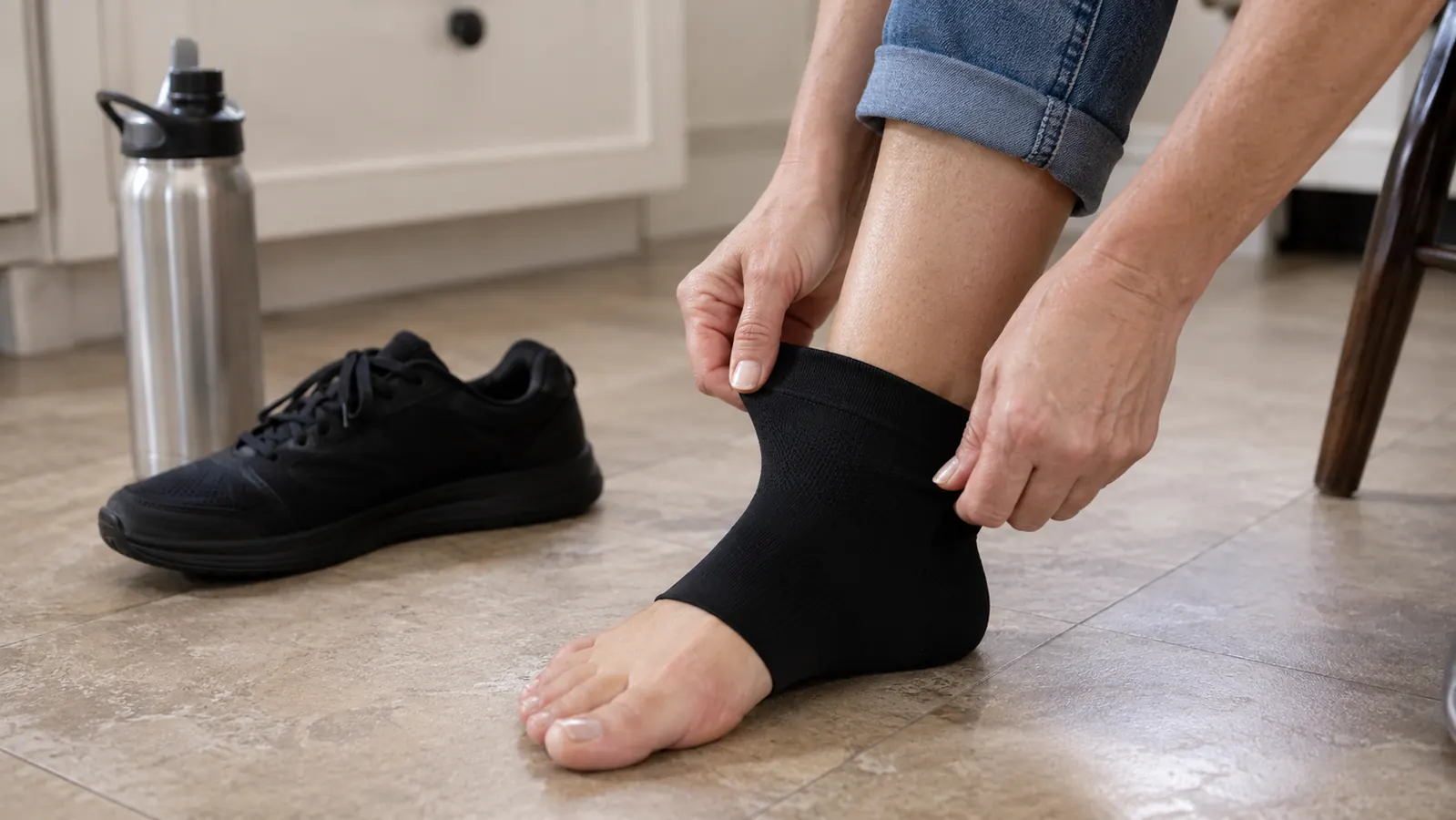
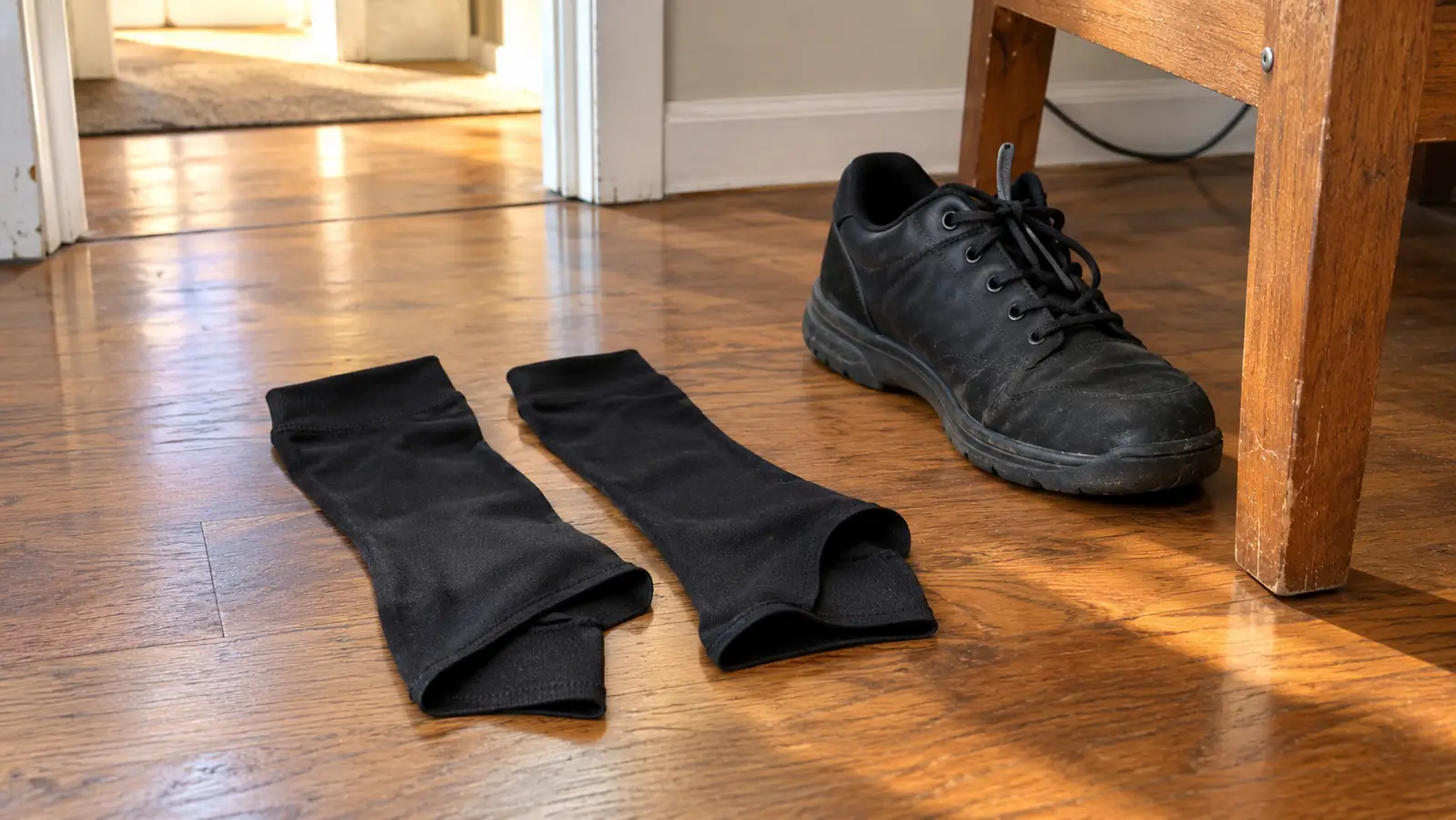
Here is the thing that surprised me, and it is the thing I would want to know first. These are ankle sleeves, not full socks. The SB SOX pair I bought stops just past the arch, and my toes are bare inside the sneaker. I did not read the listing carefully, and the first morning I pulled them on I sat there for a second thinking I had been sent half a product.
I was wrong, and now I would not have it any other way. Bare toes inside a work sneaker means my feet do not get that baked, stuffy feeling by two in the afternoon. The fabric is nylon and spandex, thin enough that it disappears under a shoe, and it does not bunch at a toe seam because there is no toe seam. It weighs almost nothing, under three ounces for the pair by the package listing, so it is not something you feel dragging at your foot when you walk. If you want a sock that covers your whole foot, this is not that product, and buying it expecting a full sock is how you end up leaving a one-star review over a detail that is right there in the description.
The second thing nobody mentions is the sizing. The listing sizes by arch measurement, not by shoe size: small for a 5 to 8 inch arch, medium for 7 to 10 inches, large for 9 to 13, extra large for 12 to 15. Those ranges overlap, which means if your arch measures 9 inches you are choosing between medium and large and you have to guess which snugness you want. There is no way to know from the outside, and that ambiguity is the single most common complaint I hear from people who try these.
The measuring part took me ten minutes and I nearly skipped it. I stood on the bathroom tile with a cloth tape and ran it from the ball of my foot around the back of my heel and up to the same point on the other side, which is the number the chart is asking for. I wrote it on the back of a receipt, checked it twice because I did not trust my first read, and then sat at the kitchen table with the listing open, comparing my number against the four ranges. Ten minutes against months of wear is a cheap trade. The people who leave reviews about a sleeve that rolls down or cuts in are, in my experience, usually the people who guessed.
My toes are bare inside the sneaker and my feet do not get that baked, stuffy feeling by two in the afternoon. That one detail is why I kept wearing them.
How It Felt, Week by Week
The snug feel took about a week to get used to. The first two mornings I was aware of them constantly, the way you are aware of a new pair of glasses. By day four I stopped noticing. By the end of the second week I noticed the absence instead, which is the useful test: on a day I forgot to put them on, the end of the shift felt heavier.
I want to be careful here, because this is exactly where a review turns into a commercial. I cannot tell you the socks did anything to my heel. What I can tell you is what I noticed. Standing on concrete from eight to five, the underside of my foot felt less beaten up at four o'clock than it had in March. The arch felt held rather than pressed. Whether that is the compression, the extra layer between my foot and a hard insole, or just the fact that I was paying attention, I genuinely do not know. Feet differ, and I would be lying if I told you mine is yours.
I wore them every shift from April through October, two pairs rotating, and both are still intact with no thinning at the arch and no stretched-out top edge. Four shifts a week since April is a lot of wear for a thin garment, and they look like they have another year in them. I wash them the same way every time, cold, inside a mesh bag, and they hang over the shower rod to dry. They have never been in the dryer and I would not put them there.
There was a Wednesday in July when I got halfway to work and realized I had left both pairs on the dresser. I spent that whole shift in the plain cotton crew socks I keep for days off. Same sneakers, same insoles, same concrete floor, same eight hours. By three in the afternoon the difference was obvious and not in a dramatic way. The underside of my foot felt flatter and more tired, the way the floor feels at the end of a long week. Nothing terrible happened. I just spent the last two hours of the shift thinking about my feet, which is not something I do when I am wearing the sleeves. That was the day I stopped wondering whether they were doing anything.
My mornings have a fixed order now, and the socks are the last step rather than the first. Sandals by the bed, first steps of the day into those, then the bathroom tile with one hand on the counter for the calf holds, then the socks, then the sneakers. The whole thing takes about twelve minutes and I do not think about it anymore. On the Sundays when Don and I walk the paved loop in our neighborhood, I wear the socks too, since the loop is a mile and a half of pavement and it costs me nothing to put them on. They have never been to bed with me and I have never worn them around the house in the evening. They are for shoes, in my house, and that is the whole of it.
The Fit Problem, Stated Plainly
A compression sleeve has to be tight to do whatever it does, and tight is not comfortable for everybody. If you have wide feet, a high instep, or ankles that swell by evening, this cut is going to fight you. The top edge sits at the narrowest part of your ankle and it does not adjust. There is no strap, no lacing, no way to loosen it. You pick a size and live with it.
That is the honest trade. A sock that stays put all shift is a sock you cannot loosen at three in the afternoon when your feet have had enough. I had one day where I wished I could, and it was the store's annual inventory Saturday in late June, an eleven hour day. By hour nine the sleeve felt like a tourniquet and I took it off in the back office for the last hour. My heel flared for about three days after that day, which I put down to the eleven hours and not the sock, but I am telling you because eleven hour days happen once a year in every job I have ever had, and a fixed-fit sleeve has no answer for them.
The other part of the fit problem is that thin fabric and a snug edge are not friends with a shoe that is already tight. I wear one pair of plain black lace-up work sneakers, worn every shift since 2024, never replaced. They were roomy to begin with, which is why the sleeves slide in without complaint. If your work shoes are already snug across the instep, adding a layer there is going to make them feel a half size small, and you will blame the sock. Loosen the laces before you blame the sock.
Who This Is For
If you stand or walk on a hard floor for a living and your heel is sore but the soreness is the dull, first-steps, end-of-day kind, this SB SOX sleeve is a reasonable thing to try. It is also a sensible buy if you travel, if you sit at a desk for long stretches, or if you simply want a thin layer of support under a normal shoe without changing your shoes. The toeless cut and the nylon and spandex fabric make it easy to wear without thinking about it, and the machine washable part matters more at 59 than it did at 35.
It suits people who are willing to buy two pairs and rotate them, and who accept that a snug garment is going to feel snug. It suits people who have already been told by a doctor to get better support and who want something simple to start with. That was my situation exactly, and I would buy them again.
I would also hand a pair to anyone who drives a lot or sits through long meetings, because the complaint I hear from the women at the counter is not about their heels at all, it is about their feet feeling heavy by the end of the day. My desk in the back office is small and I am only in it for an hour or two, and even in that short stretch the sleeve is unnoticeable in a way a full sock is not. If your day is half seated and half standing, that is the shape this thing fits best.
Who Should Skip It
Skip it if you want a full sock. Skip it if you have any numbness, tingling, swelling, or a foot that changes size through the day, and go talk to a doctor or a podiatrist before you put anything snug on it. That is not me being cautious for the sake of it. No review on the internet can tell you which foot you have, and a snug garment is the wrong experiment to run on your own.
Skip it if you have tried tight socks before and hated them, because this is tighter than a tight sock and there is no adjusting it. Skip it if you are looking for something that ends the morning pain, because in my experience it does not, and you will be disappointed in a way the product does not deserve. And skip it if you are not going to measure your arch. Guessing your size from your shoe size is how people end up with a sleeve that rolls down or cuts in, and then blames the sock for a decision they made at the keyboard.
What I Liked
- Toeless cut keeps feet from overheating under a work shoe
- Thin nylon and spandex disappears inside a normal sneaker
- Machine washable and still intact after seven months of rotation
- Sits still all shift with no rolling or bunching at the arch
- Sized by arch measurement, so a correct measurement gets a real fit
Where It Falls Short
- Fixed fit, no way to loosen it mid-shift
- Arch measurement sizing has overlapping ranges that force a guess
- Not a full sock, which the listing does not shout about
- Snug enough that wide feet or swelling ankles will struggle
- Will not end morning heel pain, and should not be sold as if it will
What I Would Do Instead, or First
Socks were the fourth thing I bought, not the first, and if I were starting over I would still put them fourth. The order I would recommend to a friend is: measure your arch, buy a firm full-length insole for the shoes you actually work in, learn to stretch your calves properly, and only then add a sleeve on top. In my own case the insoles did more for the end of a shift than the socks ever did, and the calf stretching in the morning did more for the first steps out of bed than both. That is one woman's feet and one woman's concrete floor. I say it because the order matters more than the products.
The things I tried before the socks are worth mentioning because they show you where the money goes if you are not careful. I spent three weeks in December on a pair of gel insoles from the drugstore, the squishy kind, and they went flat under me by the second week. I spent two weeks in February with a tennis ball under the back office desk, rolling my arch around at lunch, and it felt good for an hour and did nothing I could point to the next morning. I wore flat rubber flip flops to the mailbox until May, when I swapped them for something with an actual footbed, and the first steps out of bed got easier within a week of that change. None of these were a waste exactly. They were the cheap experiments you run before you know what you are dealing with.
If you have already done the insoles and the stretching and you are still looking for a bit more cushion against a concrete floor, the SB SOX sleeve is a fair next step and it is not expensive. I would not buy it as a standalone answer. I would buy it as the last five percent, the small thing you do after the useful things are in place, and then I would keep the receipt and give it three weeks before deciding whether it earned its spot in the morning routine.
Seven months, two pairs, one concrete floor. Still wearing them.
Toeless ankle sleeves in nylon and spandex, pull-on, machine washable. Measure your arch before you pick a size, not your shoe.
Amazon Check Today's Price on Amazon →