
The first four steps out of bed are the tell. Mine were, anyway. Left heel, a sharp pull from the middle of the heel toward the arch, worst on step one, easing by the time I reached the bathroom light. That started in October 2025. My right foot has never done it. In December my family doctor, Dr. Okafor, put a name to it, told me to stretch my calves and get better support, and sent me home. I am fifty nine. I manage the floor at a family hardware store in Medford, Oregon, and I stand on concrete eight hours a shift. I am not a runner. I never was.
So this is not a piece about the best insole in the world. There is no such thing, because your foot is not mine and your shoe is not my shoe. What follows is the order I would do it in if I had to start over, and the reasoning behind each step. I bought a pair of PCSsole insoles the first week of January 2026, ten months ago now, and they have lived inside one pair of plain black lace-up work sneakers ever since. Before that I had the flat foam liners that came with the sneakers and one pair of drugstore gel insoles that lasted three weeks. That is the whole of my insole history, which is worth knowing up front.
The pair that ended up in my work sneakers
High arch, firm, full length, and they fit inside the shoes I already owned. I trimmed mine to fit and wore them a shift at a time. Ten months on, they are still the ones in the sneakers.
Amazon Check Today's Price on Amazon →Five Steps I'd Take, In This Order
Step 1: Write Down When the Heel Hurts
Not whether it hurts. When. That is the first question Dr. Okafor asked me and it sorts insoles into piles faster than any review section. A heel that screams on the first four steps out of bed and then settles is a different problem from a heel that grinds down over six hours on concrete. Mine was both, but the morning was worse, and it was also worst after twenty minutes at the back desk and standing up again.
So for one week I kept notes on the back of a receipt in my pocket. Time of day, what I was standing on, which shoe, and whether it eased as I kept walking. Tile in the bathroom. Concrete at the store. Hardwood in the hall at home. The bathroom tile at ten past six in the morning was the worst thirty seconds of my day, every day, and the concrete was the steady grind underneath it. Notes like that sound fussy. They are also the difference between buying something that suits your day and buying something that suits a stranger's.
Step 2: Get the Arch Height Right Before Anything Else
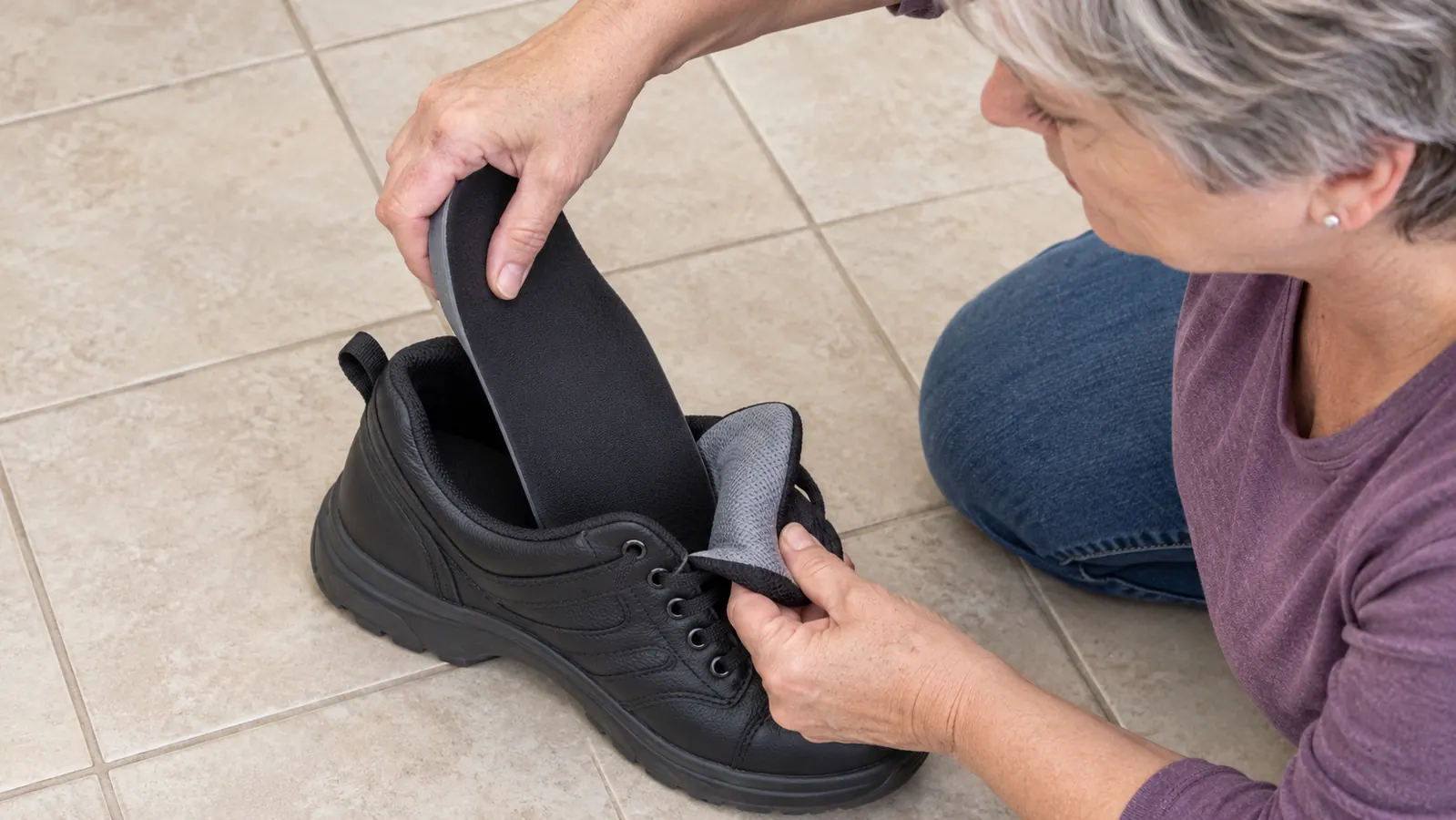
Arch height is the specification that decides whether an insole is worth trying, and most people never look at it. A soft gel pad from the drugstore sits under the heel and does nothing above it. The PCSsole insole is listed as a high arch orthotic insole with arch support built in, and that is a different animal. If the insole is flat under an arch that sits high, there is nothing underneath it and the heel does all the work.
I will be honest about the first week, because nobody told me and I nearly gave up on day three. The arch sat higher than anything I had worn and felt like standing on a small ridge. Not painful exactly. Noticeable, and I was aware of it with every step. By the second week I stopped noticing. By the third week, the end of a shift felt easier than it had in months. I cannot tell you how much of that was the insole and how much was the calf stretching I started a few weeks later. Most people start both, and I am not going to pretend I separated them.
Which brings me to who should not buy a high, firm insole. If what you want is a soft squish under the heel, this is not that, and you will be disappointed by the second day. If your foot is numb or swollen, if you have had a sudden injury, or if the pain has been getting worse rather than settling, that is a doctor or podiatrist appointment and not a shopping decision. I will not be delicate about it. An insert is a comfort item. It is not a diagnosis.
Step 3: Fit It to the Shoe You Actually Wear
Fit means the shoe you stand in, not the shoe you wish you stood in. I have one pair of plain black lace-up work sneakers, bought in 2024, worn every shift since. That is the only place my insoles go. Not the shoes I wear to the store on Saturday, not the boots in the closet. An insole in a pair of shoes you wear twice a month tells you nothing useful about anything.
The PCSsole pair is full length, so it replaces the flat foam liner that came in the sneaker rather than sitting on top of it. Pull that liner out first. Lay it flat and measure the length in millimeters, because the listing gives a millimeter length for each size, 286 for the size I looked at, and a ruler on your own liner beats guessing from the number printed inside your shoe. Mine needed trimming at the toe. Do it in small passes with the liner out of the shoe, test the fit, trim again. You cannot put material back.
Two details from the listing turned out to matter in ordinary use. It is thin, 200 grams a pair, so my toes are not crowded against the top of the sneaker the way they were with the gel pad. And it is listed as anti-slip with a heel lift and a heel protector, which mostly means it stays where I put it when I am pulling the sneaker on in the dark before a shift. Small thing. It stops being small the first time an insert slides forward under your toes at nine in the morning.
Step 4: Give It Three Weeks, Not One Afternoon
The most common mistake I see in reviews, and one I nearly made, is deciding in an afternoon. A firm insole under a high arch feels strange for the first few days. That is not a defect. It is what change feels like. Put it in on Saturday morning and take it out Saturday night and you have learned almost nothing, except that Saturday is not a shift on concrete.
What I would do instead: an hour at home on day one, in the shoes, on the tile and the hardwood, with no plans. Half a shift on day two if the first day was fine. A full shift by the end of the first week. Then leave it alone for three weeks before forming an opinion. Keep the receipt, keep the packaging, and keep the old liner in a drawer, because you may genuinely decide this is not for you. That is allowed.
And change one thing at a time. I say that having done the opposite. Insoles in January, the calf stretcher in February, the roller in March, the socks in April, the sandals in May, one a month, which was luck as much as discipline. If you buy four things in one week and feel better by June, you will never know which one earned its place, and you will keep buying all four forever.
By the third week, the end of a shift felt easier than it had in months. Not gone. Easier. I will take easier.
Step 5: Handle the Other Sixteen Hours
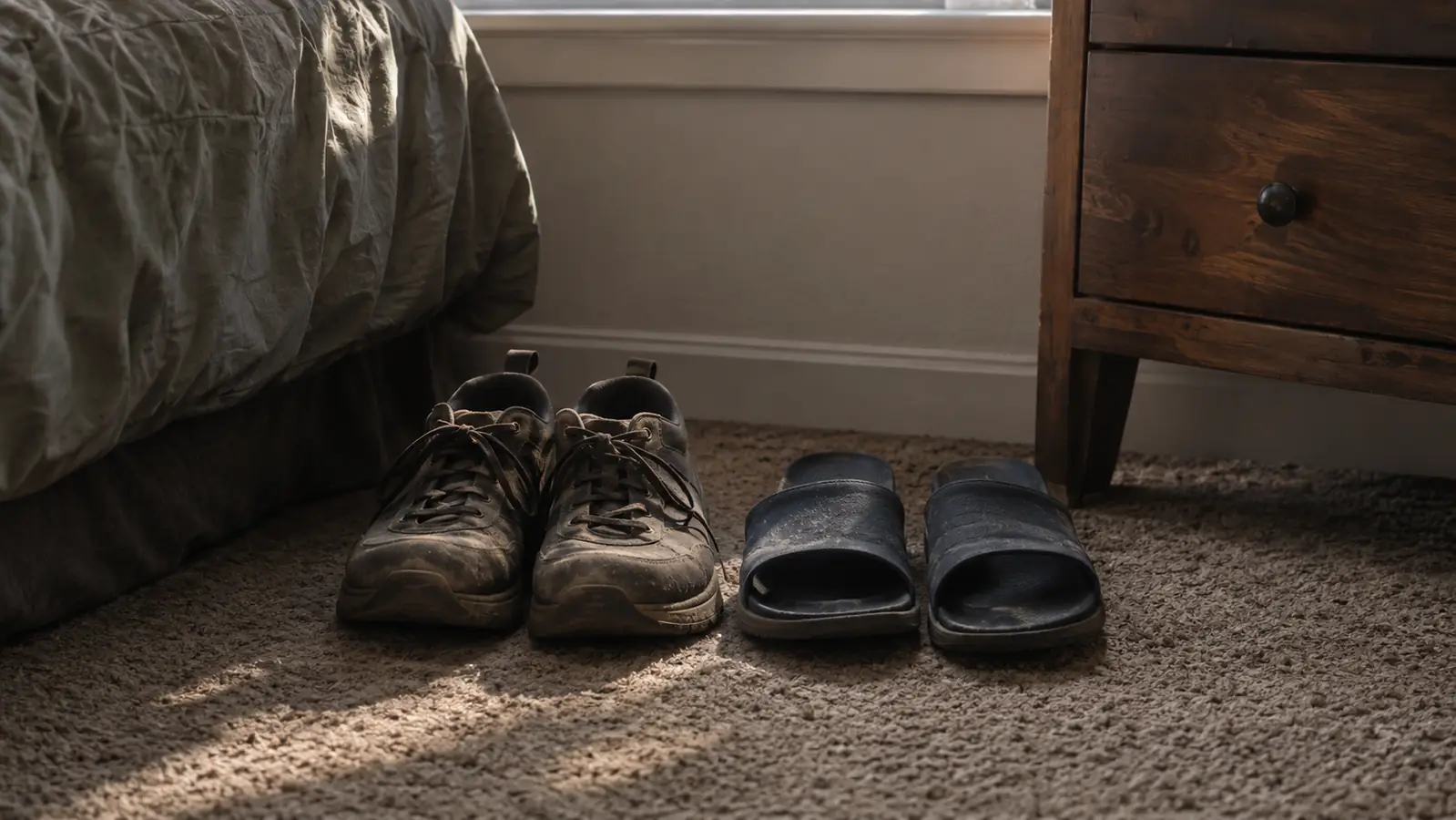
The shoe is eight hours of your day. The rest of it matters too, and this is where people buy things they do not need. My heel was worst on the very first steps, before any shoe is involved. What changed that was a pair of slip-on sandals parked beside the bed, KuaiLu slides, so my feet land on something soft on the kitchen tile at six in the morning instead of bare floor. Six months in, the first steps still ache mildly. The sharp pull is mostly gone. I call that comfort and nothing more.
Socks were the quiet one. I bought two pairs of SB SOX toeless ankle sleeves in April and wore them under the work sneakers with my toes bare inside the shoe, machine washed and air dried. The snugness took about a week to get used to, and now I notice it when I forget them. Before that it was plain cotton crew socks, which I still wear on days off. Nothing dramatic. One less thing moving around inside the shoe.
The rest of the routine sits around the edges. Three thirty second calf holds on the ProStretch rocker every morning on the bathroom tile, one hand on the counter for balance. Five minutes with the TheraFlow roller under the back office desk at lunch with my shoes off. Before the roller I used a tennis ball for about two weeks, which is fine and free if you already have one. The roller feels good for an hour or so. I am not going to tell you it does more than that.
What Else Helps
Three things I would keep if I had to hand back everything but three. The calf holds, because they take ninety seconds and cost nothing. The sandals by the bed, because the worst four steps of my day happen before I am properly awake. And the socks, because they were the least fuss of anything on the list. The PCSsole pair is still the only insole in the rotation, still in the same sneakers, and that has not changed in ten months.
What I would skip: buying a second pair of insoles for a second pair of shoes before the first pair has had three weeks. Reading two hundred reviews and concluding nothing. Assuming that because an insert worked for a stranger on the internet with a different foot, a different weight and a different floor, it will work the same way for you. It might. That is not the same as will.
I never bought a night splint, a walking boot, custom orthotics, or a second brand of anything, so I have nothing useful to say about them. My one bad stretch was the store's inventory Saturday in late June, an eleven hour day on concrete. The heel flared for about three days afterward. I did not buy anything new. I went back to the calf holds and the sandals and it settled on its own. That is the whole story, and it is a smaller story than most of what gets written about heels.
If your heel is worst on the first four steps, start here
Full length, high arch, firm, listed at 200 grams with a heel lift and anti-slip backing. Trim it to fit the shoes you already stand in, and give it three weeks before you decide.
Amazon Check Today's Price on Amazon →